
Roundhouse Bridge in Sterling Heights, MI
Replacing a full arch of teeth means choosing between very different solutions. Maybe you already wear traditional dentures, or maybe you’re researching alternatives before committing to treatment. Either way, you’ve probably heard how difficult conventional dentures can make eating and speaking. Snap-in dentures offer more stability than traditional dentures, but they are still removable, and some patients may want something that stays in place and feels more reliable day to day. Roundhouse bridges offer a more natural alternative, one that looks, feels, and functions more like your old teeth. At St. Apollonia Dental, Dr. Pearson offers two roundhouse bridge options to replace a complete arch of teeth.
What Is a Roundhouse Bridge?
A roundhouse bridge is a full-arch tooth replacement made of zirconia and secured to dental implants. Unlike conventional dentures, roundhouse bridges have a more streamlined design that reduces the bulky appearance of pink plastic gums. Depending on the shape of your gums and jawbone, your custom roundhouse may not require any pink material at all.
The difference in feel is something patients notice right away when they get a roundhouse bridge. That’s partly because a conventional upper denture covers the roof of your mouth, and that covering affects your ability to taste your food. Patients get that back when the palate covering is gone. Lower dentures, on the other hand, tend to move around and cause irritation. That affects how you chew and how confidently you speak. A roundhouse bridge gets rid of all that. There’s no plastic, just teeth anchored to implants. You chew better, you taste your food better, and you stop worrying about your teeth moving when you eat, speak, laugh, or smile.
At St. Apollonia Dental, Dr. Pearson prefers to secure roundhouse bridges with mini dental implants because they are easier to place and healing is uneventful. Most patients manage any soreness with nothing more than aspirin the evening of the procedure. Mini implants also open the door for many patients who were previously told they didn’t have enough bone for conventional implants, since they require far less bone width for placement.
There are two ways to go with a roundhouse bridge: cemented or semi-removable (meaning only Dr. Pearson can take it out). Either way, you’re getting a more stable alternative to dentures.
Cemented Roundhouse Bridge
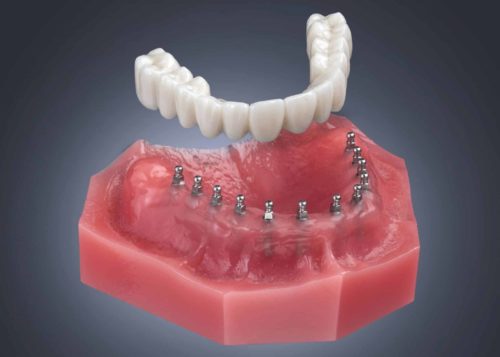 If you want the option that most closely mimics the stability of your original smile, consider a fixed roundhouse bridge. This option is permanently cemented onto 10-12 mini implants, staying put with many pillars of support.
Because it’s not removable, maintaining excellent at-home hygiene is especially important. While it’s the most expensive full-arch option, it also comes closest to recreating the look, feel, and function of your original teeth.
This option can last 10-20 years or longer. It’s often the longest-lasting of all the denture alternatives.
Semi-Removable Roundhouse Bridge
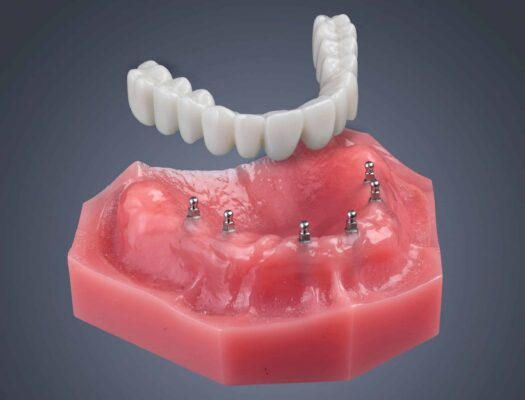 This option, sometimes called Fix-on-Six®, is supported by 6-8 mini implants. The full-arch replacement itself has rubber cushioners that take the stress off the implants, which is why they use fewer implants than the permanent roundhouse bridge.
We call this option “semi-removable” because Dr. Pearson will remove it at regular checkups for professional deep cleaning. You won’t ever have to remove it at home.
This option is more affordable than the fully permanent alternative, while still feeling more natural than removable options. We find that semi-removable roundhouses are ideal for patients who want implant stability at a more modest price point.
With proper care, this option can also last 10-20 years or longer.
Roundhouse Bridges Process Explained
Wondering what to expect from the roundhouse bridge process? Here’s how it usually unfolds:
Free Implant Consultation
We offer free consultations to provide patients with personalized guidance on their treatment options. During your consultation, Dr. Pearson will examine your mouth and learn about your overall health to determine your needs. He will also take CBCT images to evaluate the quantity and quality of available bone before creating your treatment plan. This part of the process is often the most time-consuming, but it’s also one of the most critical. The success of the treatment itself hinges largely on the planning process.
Implant Placement and Temporary Prosthetic
Next, if you have anxiety about the procedure, Dr. Pearson can administer light sedation to ensure you’re comfortable. After numbing the treatment area, he’ll place your mini implants by making a series of small punctures in the gums. Then, he’ll gently position each implant in the prepared site. This process takes place in a single appointment lasting approximately 1.5 hours. Because mini implants are immediately stable, Dr. Pearson can add a temporary restoration on top right after. You’ll leave the office with a complete set of teeth on the same day. And, since the procedure is minimally invasive, you should experience very little discomfort as you heal.
Permanent Restoration and Aftercare
A few weeks later, after you’ve had some time to heal and your custom roundhouse has been made, you’ll return to our office. We’ll make sure everything looks and functions the way it should before securing your new bridge. You’ll also leave with a complimentary Waterpik® to help extend the lifespan of your restoration.
The entire process usually spans 4 to 5 visits, giving Dr. Pearson time to make sure every detail looks and feels right. He’ll walk you through each phase of treatment so there are no surprises along the way. The result is a more natural-looking, comfortable full-arch solution that helps you smile with greater confidence.
Learn More at a Free Implant Denture Consultation
Choosing a full-arch tooth replacement is a big decision, especially if you’ve already experienced the frustrations that come with traditional dentures. Roundhouse bridges offer a different experience: stronger chewing ability, greater stability, a more natural appearance, and teeth that stay securely in place throughout your day.
At St. Apollonia Dental, Dr. Pearson offers multiple roundhouse bridge options. The semi-removable option offers a more budget-friendly way to achieve the stability and appearance many patients want. And for those seeking the closest match to natural teeth, the permanent roundhouse bridge provides the most realistic result.
We’re dedicated to providing advanced treatment techniques in a welcoming, family-friendly environment. If you’re ready to explore a more stable alternative to removable dentures, a roundhouse bridge may be the right fit. Book a free consultation today to learn more.
Frequently Asked Questions
Cost depends on which type of roundhouse bridge is right for you. The semi-removable roundhouse bridge runs between $10,000 and $16,000. The fixed, permanently cemented option tends to come out to $20,000.
While replacing your teeth is a notable investment, we offer flexible financing to help you afford treatment. Our lending partners offer financing pathways that include interest-free periods and repayment timelines of up to 12 years, depending on the provider and your qualifications. This means you’ll be able to enjoy the benefits of a secure, stable smile without paying the full amount upfront.
To clean your roundhouse bridge, brush daily, just like you would with regular teeth. However, it’s important to understand that the area beneath the bridge is nearly impossible to clean with a toothbrush alone. To keep bacteria at bay, you should use a Waterpik® to clean under the bridge. Dr. Pearson suggests filling the reservoir about a quarter of the way with hydrogen peroxide and topping it off with water. Used nightly, it does a fantastic job of keeping things clean and reducing the risk of problems. When your final prosthetic is delivered, we’ll provide a complimentary Waterpik as part of your treatment. It’s that important!
Treatment for the roundhouse bridge is normally very comfortable from start to finish. You’ll be completely numb for the entire implant placement process. For patients who struggle with dental anxiety or who tend to feel tense holding their mouth open for a long stretch, our practice offers light oral sedation to help you relax. Patients usually experience mild soreness for a day or two after, which they can easily manage with over-the-counter painkillers.
All-on-4 is a technique that uses four conventional implants to support a full set of replacement teeth. While this approach can be effective, its biggest limitation is that the entire restoration depends on the success of all four implants. If even one implant fails, the entire case often needs to be redone from the beginning. That’s why Dr. Pearson says, “All-on-4 can quickly become none-on-three.”
Instead, Dr. Pearson prefers to use multiple mini dental implants to create a more stable foundation. If one mini implant were to fail, the remaining implants can often continue to support the restoration.
Another important difference between All-on-4 and our roundhouse bridge solutions relates to bone preservation. Because conventional implants are larger in diameter, they sometimes require reducing or reshaping parts of the jawbone to create enough space for placement. Dr. Pearson chooses mini dental implants whenever possible because their smaller size helps preserve more of your natural bone structure.
Both options are supported by mini dental implants, but the prosthesis sitting on top of those implants is very different. A snap-in denture looks and feels similar to a traditional denture. It still has a bulky, plastic acrylic base with a large amount of gum-colored material. You snap it onto your implants each morning and remove it at night for cleaning. It is the most affordable implant denture option.
A roundhouse bridge is an arch of connected zirconia teeth, free of any bulky base. You never take out a roundhouse bridge at home. Dr. Pearson removes the semi-removable roundhouse bridge at your regular cleanings, whereas the cemented roundhouse bridge is permanently fixed in place. Both offer a closer feel to natural teeth than a snap-in denture.
Related Videos
- What Is a Dental Implant?
- What Is a Mini Dental Implant?
- Mini Dental Implants vs. Conventional Implants: What’s the Difference?
- What Are the Advantages of One-Piece Mini Dental Implants?
- Can a Tooth Extraction and Dental Implant Be Done the Same Day?
- What If I Don’t Have Enough Bone for a Dental Implant?
- Is Bone Grafting Required for Mini Dental Implants?
- Who Is a Good Candidate for Mini Dental Implants?
- What Issues Can Dental Implants Correct?
- What Are My Options for Replacing a Single Missing Tooth?
- What Are My Options for Replacing Multiple Missing Teeth?
- What Are My Options If I’m Missing All of My Teeth?
- Do You Offer Same-Day Dental Implants?
- Are Dental Implants Safe?
- Does Getting a Dental Implant Hurt?
- Free Dental Implant Consultation: What to Expect?
- The Mini Dental Implant Process Explained Step by Step
- How Long Does the Dental Implant Procedure Take?
- How Many Appointments Are Needed for Mini Dental Implants?
- How Long Do Mini Dental Implants Last?
- What Can I Eat After Dental Implant Surgery?
- Dental Implant Healing and Aftercare: What to Expect
- What Is the Success Rate of Mini Dental Implants?
- How Much Do Dental Implants Cost?
- Are Dental Implants Covered by Insurance?
- Do You Offer Payment Plans for Dental Implants?