
Bite Guards in Sterling Heights, MI
Do you wake up with headaches or a sore jaw that cracks or pops when you yawn? These symptoms may be signs of bruxism, a condition that causes you to clench or grind your teeth. Bruxism often happens without you realizing it, such as when you’re asleep, concentrating, or reacting to stress. Fortunately, there are simple ways to address the problem and maintain good oral health. Bite guards, for example, are one of the most practical ways to protect your smile. These custom oral appliances distribute forces over a broader area, reducing strain on your teeth and jaw.
For bite guards in Sterling Heights, MI, visit St. Apollonia Dental.
What Causes Bruxism?
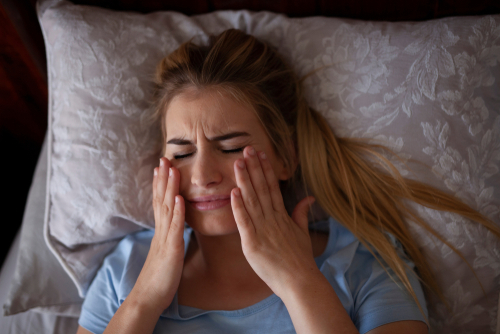 Gnashing, clenching, or grinding your teeth is relatively common in the United States. One study found that the prevalence of bruxism (both sleep and awake) was about 30% in North America, surpassing the other continents in the report.
While the exact cause of teeth grinding is unknown, experts link it to a variety of conditions. Feelings of stress or anger, untreated sleep apnea, or even certain medications have all been linked to bruxism in one way or another.
Unfortunately, teeth grinding can wreak havoc on your oral health, especially when it happens unconsciously. After all, you can’t control something you don’t realize is happening!
Because the condition often goes unnoticed, many patients fail to recognize the signs of bruxism or connect symptoms like headaches and jaw pain to teeth grinding. As a result, the damage can continue for months or even years before treatment begins.
The Effects of Bruxism
Without treatment, consistent teeth grinding will take a toll on your smile. If you think you may be clenching your teeth unconsciously, here are some signs and symptoms to look out for:
- Enamel wear: As teeth grind together, you may notice that your enamel begins to wear down and look flattened. You may even create small chips and cracks if you clench hard enough.
- Tension headaches: The more you clench, the more likely you are to experience headaches from the pressure. Typically, these headaches occur at your temples and are worst in the morning.
- TMJ problems: Your TMJ (or Temporomandibular Joint) is the joint that connects your lower jaw to your skull, allowing it to move fluidly. But when there’s too much pressure or strain on this joint, you may develop temporomandibular joint disorder. Bruxism aggravates the effect of TMJ disorder, as it adds even more stress on your jaw.
- Restoration damage: Dental restorations like crowns, fillings, and veneers are durable, but not invincible. Bruxism can cause your restorations to loosen, fall out, or even break under the pressure. We’ve had patients who have broken zirconia crowns because of unmanaged bruxism.
At St. Apollonia Dental, we see many patients in our office who don’t even realize they’re dealing with bruxism until the damage is already done. If you think you may be grinding your teeth, visit us in Sterling Heights as soon as possible to talk about potential solutions!
Introducing: Bite Guards in Sterling Heights
To help with bruxism, alleviate TMJ symptoms, and protect your dental work, we can create a bite guard. This appliance goes directly over your upper teeth and is custom-fit to the contours of your mouth.
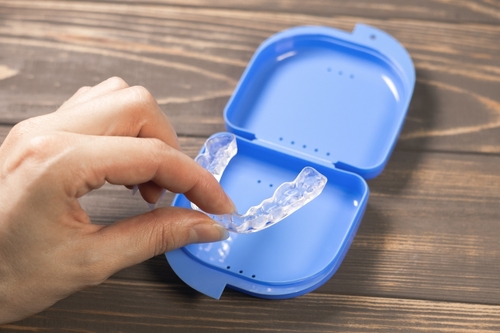 With a bite guard in place, you can protect your teeth from the constant pressure of bruxism. Instead of allowing your teeth to grind directly against each other, the smooth plastic material cushions your bite and helps absorb some of the force from clenching.
Bite guards also create a snowshoe effect by distributing the pressure of chewing and grinding over a broader area rather than concentrating it on individual teeth. Best of all, they’re easy to pop in and out, making them a simple and convenient way to protect your smile.
To craft bite guards in Sterling Heights, we need to take an impression of your smile. At our office, we use innovative technology to make the impression process easier for patients like you!
With our intraoral scanner, we take an impression of your smile without using the messy goop you may be used to. This technology digitally scans your smile to create a 3D image. Using the image, our lab then creates a bite guard that fits your smile perfectly.
An intraoral scanner is not only more comfortable than traditional impression material, but it also helps speed up the process. With a digital impression, we can design and fabricate your bite guard quickly, providing you with fast and effective care.
Protect Your Smile With Bite Guards in Sterling Heights, MI
If you think you may be experiencing signs of bruxism, it’s important to protect your teeth before the condition causes lasting damage. At our office, we find that around half of patients would benefit from a bite guard. However, most of them don’t even know they need one until the damage is done. To protect your smile, visit St. Apollonia Dental in Sterling Heights! We offer effective bite guards that protect your enamel, safeguard your dental work, and alleviate TMJ disorder symptoms.
Book a free consultation with us to learn if a bite guard is right for you.
Frequently Asked Questions
Not usually. Store-bought mouth guards may seem like a quick fix, but the soft material can actually make clenching worse for some patients. Because they have more “give,” it’s easier to bite down harder and really dig into them during sleep. That defeats their purpose.
At our office, we create custom bite guards tailored to your smile and bite pattern. They have a softer inner lining for comfort but a durable, hard outer shell that helps distribute pressure more evenly. They also fit more securely, so they stay in place better.
In most cases, patients find custom bite guards more comfortable, protective, and easier to wear consistently.
You can talk while wearing a bite guard, though it may sound a little different at first. However, most patients adjust quickly after consistent wear.
Since our custom bite guards are made to fit your teeth snugly, they should feel much less bulky than over-the-counter options.
We recommend rinsing your bite guard with cool water after each use and gently brushing it with a toothbrush and mild soap (no toothpaste) to remove buildup. Avoid using hot water, as heat can warp the material and affect the fit.
You can also occasionally soak your bite guard in a denture cleaner to help keep it fresh.
When you’re not wearing it, store it in its protective case so it stays clean and dry. During your regular checkups, Dr. Pearson can also inspect your bite guard to make sure it still fits properly and is holding up well.
Yes, Botox is becoming an increasingly popular option for patients with severe clenching and grinding habits. Dr. Pearson is specially trained to administer Botox for dental purposes, and one of its most common uses in dentistry is relaxing overactive jaw muscles.
Some patients have jaw muscles so strong that they can actually crack or break dental restorations, including zirconia crowns. Botox helps reduce the force of those muscle contractions, which can protect your teeth, restorations, and jaw joints. It’s also helpful for patients who struggle to wear their bite guard consistently. After all, bite guards only work when you remember to wear them, and sometimes missing just a few nights is enough to cause damage.