
Root Canal Treatment in Sterling Heights, MI
Hearing that you need root canal treatment can feel intimidating, especially if you’ve never had the procedure done before. Patients are often afraid that root canal therapy is painful. The good news is that root canal treatment actually relieves pain and saves that tooth from extraction! Like repairing hidden water damage before it spreads through a home, a root canal repairs damage to the tooth’s internal structure before the entire tooth is beyond saving.
Despite its reputation, modern root canal treatment is far more comfortable than most people expect. Thanks to advanced imaging, precise techniques, and local anesthesia, the procedure relieves pain caused by infection—it doesn’t create it! In many cases, patients feel relief from sensitivity once we remove the inflamed tissue.
Dr. Charles Pearson believes that restorative treatments, like root canal therapy, are the backbone of dentistry. At St. Apollonia Dental, we use the latest techniques to provide gentle root canal treatment that extends the life of your tooth.
Understanding Root Canal Therapy
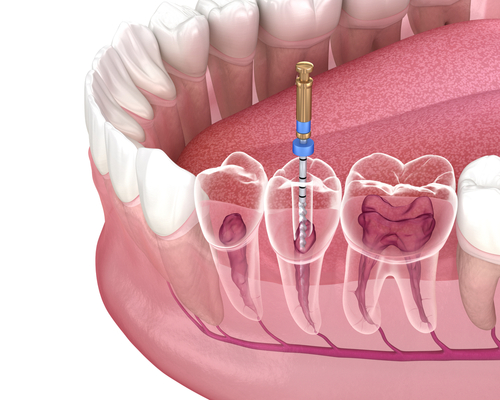 So what is root canal treatment, exactly? People often refer to the procedure as “getting a root canal,” but that’s a misnomer. Every tooth has root canals. When Dr. Pearson performs root canal treatment, he removes infected nerve tissue from inside the root canals. The tooth itself remains anchored in the jawbone and can continue functioning normally after treatment and crown placement.
Also called endodontic therapy, root canal treatment is often recommended when deep decay, cracks, trauma, or infection reach the pulp (the innermost layer of the tooth). By treating the infection promptly, Dr. Pearson can often prevent the need for extraction.
Although root canal treatment has a reputation for being painful, the procedure is actually meant to relieve discomfort. Once we remove the infected pulp, temperature sensitivity and infection-related pain typically subside.
Saving your natural tooth in this way is usually the healthiest long-term option. Repairing and restoring the tooth helps maintain normal chewing function, prevents neighboring teeth from shifting, and can reduce the need for more extensive restorative procedures, such as dental implants.
Signs You Need Root Canal Treatment
One of the most common signs you need root canal therapy is a persistent toothache that doesn’t go away. Some patients notice the discomfort worsens while chewing, biting down, or drinking hot or cold beverages. Other signs you may need treatment include:
- Radiating pain in the jaw, ear, or surrounding teeth
- Darkening or discoloration of the tooth
- Swelling or an abscess near the tooth root
- Persistent bad taste in the mouth from infection drainage
In some cases, a tooth may need root canal treatment even if you are not experiencing severe pain. Chronic infections can quietly spread beneath the tooth and damage the surrounding jawbone without obvious symptoms. This is one reason routine dental scans are so important.
If a tooth that needs a root canal is left untreated, the infection can worsen over time and may eventually require extraction. Early treatment is usually simpler, more comfortable, and more predictable than waiting for the infection to progress.
The Root Canal Treatment Process
Root canal therapy is a highly predictable dental procedure that tends to follow the same sequence:
Preparation
First, Dr. Pearson takes CBCT (Cone Beam Computed Tomography) images. This 3D dental X-ray produces a detailed, cross-sectional view of the tooth, surrounding bone, and nearby nerves. The generated images help Dr. Pearson see details that are otherwise hard to see, like fractured roots. They also help him plan treatment with more precision than a standard X-ray.
At the start of the procedure, he administers a local anesthetic to keep you completely numb and comfortable throughout. Nervous patients may also opt for oral sedation to help them relax.
Treatment
Once you’re ready, Dr. Pearson makes a small opening through the crown of the tooth to access the pulp chamber. He then removes the inflamed tissue.
Dr. Pearson flushes, cleans, and reshapes the inside of the tooth to clear infection from the canals using a rotary filing system, a tiny instrument that helps with precise cleaning. He also uses an electronic root-measuring device so that he knows how deep into the tooth to go. It’s like a dental GPS that helps him treat the infection thoroughly without going too far.
After removing all infected tissue and reshaping the canals, he fills them with a rubber-like material and places a temporary restoration over the tooth.
After treatment, patients often experience immediate relief. However, mild sensitivity in the surrounding tissue is normal in the first few days and should resolve quickly.
Final Restoration
At a follow-up appointment, Dr. Pearson places a permanent dental crown over the treated tooth. The crown restores the tooth’s shape, strength, and function while protecting it from future damage. Because teeth that have undergone root canal treatment can become more brittle over time, the crown helps reinforce the remaining structure so you can continue chewing and speaking comfortably.
Once the crown is in place, the restored tooth can function much like a natural tooth again. With good oral hygiene and regular dental visits, many root canal-treated teeth last for many years.
Keeping your natural teeth is always the priority. Root canal therapy exists for exactly that reason: to give a tooth a second chance rather than taking it out.
Schedule a Free Consultation To Save Your Tooth!
A persistent toothache, sensitivity to hot or cold, or swelling around a tooth are signals worth paying attention to. Any one of them could indicate that the tissue inside the root canal is damaged or dying. In these cases, Dr. Pearson will determine whether root canal treatment could help.
While this treatment has a reputation for being scary or painful, fear not! At St. Apollonia Dental, we provide gentle, restorative treatment to relieve infection and toothaches using modern techniques and tools.
Take it from us: root canal treatment is intended to reduce pain, not add to it. We’ll be honest with you about every part of the procedure and prioritize your comfort throughout. Schedule a free consultation today and save that tooth!
Frequently Asked Questions
If we can save the tooth with root canal treatment, we will always recommend that before an extraction. Your natural teeth are irreplaceable. Nothing is quite the same as what you were born with. Root canal therapy lets us remove the damaged or infected tissue from inside the tooth, get rid of the pain, and keep everything right where it belongs. Your bite stays stable, the neighboring teeth don’t start drifting, and you avoid the cost and process of replacing something that didn’t have to go in the first place.
That said, sometimes the tooth just can’t be saved. In some cases, the damage goes too deep, or there simply isn’t enough healthy tooth structure left to work with. When that happens, an extraction might be the right call. When you come in for a free consultation, Dr. Pearson can take a look at your tooth and help you make the best decision for your health.
After a root canal, you’ll probably have some soreness around the tooth for the first couple of days, but this should subside soon after. The anesthesia wears off within a few hours of leaving the chair. Once it does, some mild tenderness is normal, and an over-the-counter pain reliever like ibuprofen or Tylenol usually handles it just fine. For most people, recovery is quick and very manageable.
The most painful part of a root canal is usually the days before you come in. When that tissue inside the tooth gets inflamed or infected, you’ll experience throbbing and sensitivity to hot and cold.
When you come in for the treatment itself, we make sure you’re fully numb and comfortable. You might feel a little pinch from the anesthetic injection. That might sting a bit, but it’s very brief. After that, the procedure itself is really just pressure and movement. You might notice some mild soreness afterward for a day or two, but it should be nothing like what you’ve already experienced. Most people go right back to their normal routine.
Related Videos
- What Is Periodontal Disease?
- How Is Gum Disease Treated?
- When Is a Root Canal Needed?
- Why Should Missing Teeth Be Replaced?
- Do You Offer Sedation Dentistry?
- What Is Sleep Apnea and How Is It Treated in Dentistry?
- What Is an Intraoral Scanner?
- What Is a CBCT Scan and Why Does My Dentist Need One?
- Meet Dr. Charles Pearson
- Why Choose St. Apollonia Dental?
- Free Dental Consultations: What St. Apollonia Offers