
Dentures in Sterling Heights, MI
Losing your teeth affects more than your ability to chew. It affects how you speak, how you feel about yourself, and whether you feel comfortable in a room full of people. If you are missing all or most of your teeth, traditional dentures are one way to address that. At St. Apollonia Dental, Dr. Charles Pearson has been restoring smiles for patients in Sterling Heights for more than 40 years. He offers conventional dentures as part of a broader range of tooth replacement options, and he will give you an honest picture of what each one can and cannot do before you make any decisions.
What Are Conventional Dentures?
A conventional denture is a removable prosthesis custom-made to replace a full arch of missing teeth. Upper dentures cover the roof of the mouth (the palate) and rely on suction to stay in place. Lower dentures rest on the gum ridge and are generally held in place with dental adhesive. They are typically made from acrylic resin with porcelain or acrylic teeth set into the base.
Conventional dentures have been around for a long time, and for some patients, they’re a reasonable solution. For others, they come with challenges that are worth understanding upfront.
What You Should Know Before Choosing Dentures
Conventional dentures have real limitations, and patients deserve to hear them before committing to treatment.
Upper dentures, when they fit well, tend to perform reasonably. The palate creates a larger surface area for suction, which gives them a degree of stability that the lower simply can’t match. That said, covering the roof of the mouth does come with a trade-off: research shows that patients with upper dentures have more difficulty detecting flavors than people with natural teeth. That’s an important consideration for many people, as enjoying a meal is one of life’s simple pleasures.
The lower is a different story altogether. Lower complete dentures float on the gum ridge, which is a narrow and shifting surface. Chewing, speaking, and even sneezing can dislodge them. Many patients manage, but many others struggle significantly, and no amount of adhesive fully solves the problem.
Why Dentures Loosen Over Time
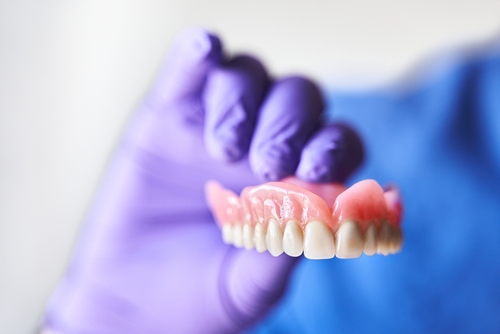 Even a denture that once fit well will loosen as time goes on. It’s not usually the denture that has changed; it’s your jawbone. When you lose a tooth, the roots no longer stimulate the jawbone when you bite and chew. That stimulation is what keeps the bone healthy and dense. Without it, the jawbone in that area begins to shrink.
Because conventional dentures sit on top of the gum ridge and don’t replace the missing roots, they can’t prevent this bone loss from happening. Over time, the jawbone continues to deteriorate, changing the fit of your denture.
A denture ultimately loosens not because it was made wrong, but because the ridge it was built for no longer exists in the same shape.
At St. Apollonia Dental, many denture wearers come to us with dentures that no longer stay put, looking for better solutions. With dental implants, we can stabilize dentures so that your bite is consistently stable and you don’t have to worry about unwanted movement.
A Note on Lower Dentures
We no longer place lower complete dentures without implant support. That is a deliberate choice, not a gap in services. After decades in practice, Dr. Pearson has seen firsthand how much difficulty patients have with free-floating lower dentures. They move when you eat. They move when you talk. Patients are frustrated, and often they blame themselves or their dentist when the real problem is the nature of the prosthesis itself.
Dr. Pearson’s view is simple: if he is going to do something, he is going to do it right. A lower denture without any implant support does not meet that standard for most patients.
If budget is a concern, there are still affordable options that provide far more stability than a traditional lower denture. We will go through those with you at your free consultation.
Better Options for Full-Arch Tooth Replacement
If you are missing all of your teeth, we have options beyond a conventional denture. Dr. Pearson offers several implant-supported restorations that vary in cost, complexity, and impact on day-to-day life.
Denture Stabilization With Implants
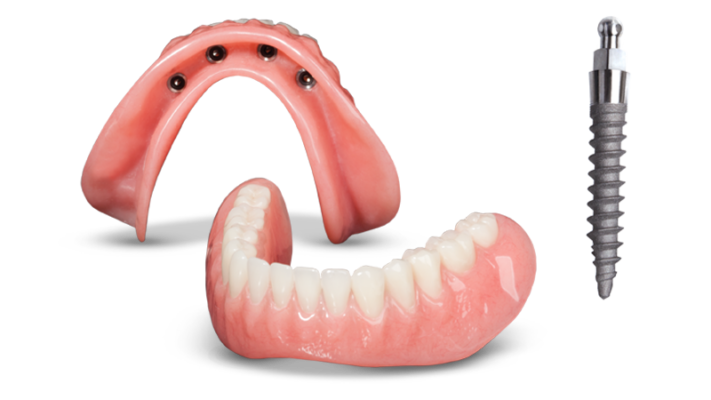 If you already have a denture that is moving around, this is often the most affordable first step. Dr. Pearson places 4-8 one-piece mini implants in the jaw and adds small clips to the underside of your existing denture. The denture snaps onto the implants and stays put. You can come in, have the implants placed, and leave the same day with a denture that no longer shifts when you chew or speak.
This option works especially well for lower dentures, which benefit most dramatically from even minimal implant support.
Semi-Removable Roundhouse Bridges
The semi-removable roundhouse bridge is Dr. Pearson’s most commonly performed full-arch restoration. It is built from scratch and supported by 6-10 mini implants with rubber O-ring attachments. Those O-rings cushion the restoration and allow fewer implants to anchor the teeth, helping control costs.
Unlike a denture, there is no palate. The restoration covers only the teeth and gum line, so your taste and temperature sensations are preserved. And with added implant support, you can eat all your favorite foods more confidently.
While you won’t remove the restoration at home, Dr. Pearson will do so at your routine visits. He’ll professionally clean the restoration and clean around the implants to help keep everything looking and functioning properly.
Cemented Roundhouse Bridges
Cemented roundhouse bridges look like the semi-removable versions, but Dr. Pearson permanently cements them onto 10-12 one-piece implants.
This restoration never comes out. There’s no soaking it overnight. No worrying about dropping it. No palate. It functions as close to natural teeth as any restoration currently available.
It is also the most expensive option, and it requires the most implants. However, for patients who want the best possible outcome and have the bone to support it, it’s an excellent option.
Book a Free Consultation To Explore Better Denture Solutions
For many people, losing teeth means constantly thinking about things that once felt automatic, like eating comfortably or speaking confidently. But you don’t have to settle for a replacement solution that leaves you frustrated or uncomfortable. Conventional dentures can work for some patients, but understanding their limitations is just as important as understanding their benefits when making informed decisions.
At St. Apollonia Dental, Dr. Pearson will always explain all your options, including implant-supported restorations that provide greater stability, comfort, and confidence. If you are tired of loose dentures or wondering what solution is right for you, schedule a free consultation today.
Frequently Asked Questions
Most conventional dentures last somewhere between five and ten years, but their fit tends to become an issue well before that. As the jawbone shrinks over time, the ridge the denture was designed around changes shape. For that reason alone, a denture that felt fine at first can start moving around years later. Regular checkups help us catch these issues early and plan solutions.
A partial denture replaces some missing teeth, not all of them. It clips onto your remaining teeth for support and fills in the gaps. However, for better long-term outcomes, we often recommend dental implants to anchor dental crowns or bridges wherever you’re missing teeth.
Mini implants keep the denture where it belongs. Instead of floating around on the gum ridge, the denture connects to the implants and stays put. You can eat, speak, and sneeze without thinking about your denture moving. And because we place several of them, if one ever fails, the others carry the load. You have got enough spare tires to do the job.
They are also a good fit for patients who have been told they don’t have enough bone for conventional implants. Conventional implants are wider, and placing them in a jaw that has lost significant bone often requires bone grafting before anything else can happen. Mini implants are narrower by design, so we can work with the bone you have.
Related Videos
- What Denture Options Are Available?
- What To Do If Your Dentures Are Loose
- What Is an Implant Denture?
- How Many Implants Are Needed To Stabilize a Denture?
- Can My Current Denture Be Converted to an Implant Denture?
- What Are the Benefits of Implant Dentures?
- Will Implant Dentures Affect My Ability To Eat and Speak?
- Who Is a Candidate for Implant Dentures?
- Does Getting an Implant Denture Hurt?
- What Are All-on-4 Dental Implants?
- What Is a Snap-In Denture?
- What Is a Semi-Removable Denture?
- What Is a Roundhouse Bridge?
- The Implant Denture Process Explained Step by Step
- How Long Does the Implant Denture Process Take?
- How Do I Care for My Implant Denture?
- How Much Do Implant Dentures Cost?
- Does Insurance Cover Implant Dentures?
- Do You Offer Payment Plans for Implant Dentures?